

















It’s the latest AI trend, and it’s all over your Instagram feed.
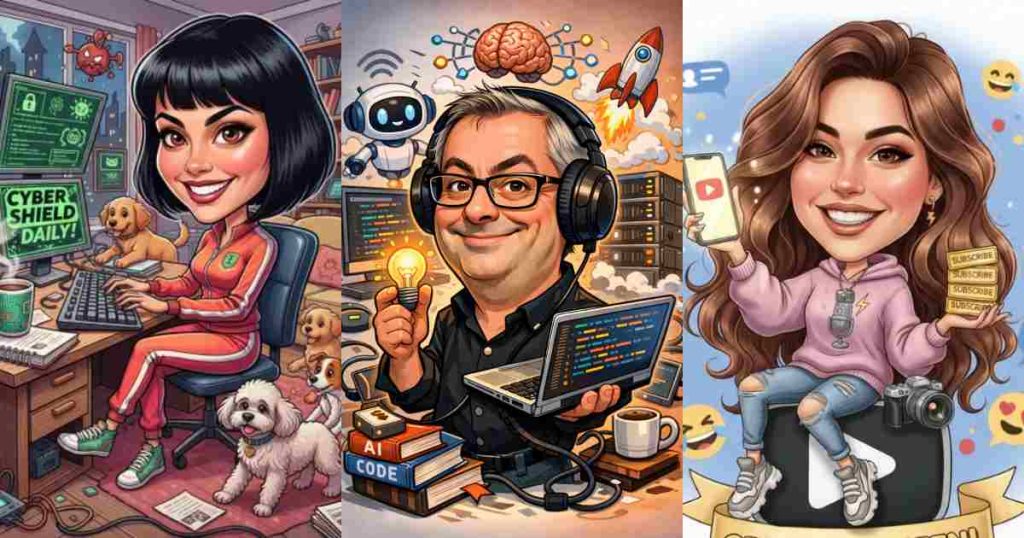
You’ll see your followers, celebrities, and coworkers excitedly posting AI-generated caricatures of themselves. With exaggerated facial features and humorous curation of hobbies, personality traits, and career, the trend is highly appealing. People have been feeding their selfies and photos into chatbots like ChatGPT to generate these satirical portraits. This may seem like meaningless fun, but cybersecurity experts warn that it means more than it seems.
Why Your Data Is at Risk
AI gets more than just an image when you upload your photos to it. Personal and professional details are part of the package, and the system gets it directly from you. David Grover, senior director for cyber initiatives, explains that all the data that is fed into these systems is stored and could possibly be directed to company databases. He added that the more data that is uploaded, the harder it becomes to protect a user’s information.
Cybersecurity researcher at UAB, Shuya Feng, adds that AI models also gain access to sensitive details such as hair colour, eye colour, and other biometric details. Bio details are at risk for exploitation for bank fraud, medical record breaches and identity theft. Hackers may also tap into this information to carry out scams or generate deepfakes.

How to Protect Your Data
Nothing is safer than just not uploading your personal information at all. It is strongly recommended to disable data sharing while using AI platforms. Using AI services has become quite common, but the option to not share data is present on most reputable AI platforms, and it is best to avoid those that don’t. The model is then unable to train itself using your uploads. Users also need to be educated about AI models and made aware of the privacy risks that come up while using AI.
It’s also important to remember that precautions aren’t always enough. Uploaded images can be scraped, downloaded and reposted online by others. Posting images onto social media amplifies this risk, with image circulation being higher in possibility through reposts and easy share options. Major AI platforms such as OpenAI, Anthropic, and Google offer data protection measures, but users need to remain cautious, nonetheless. Sensitive data such as addresses, financial details, or private images should never be put into AI chatbots, regardless of the purpose or platform.
Fun at the Cost of Privacy Concerns
Admittedly, the AI caricature trend has its charm. Its interactive and personal, similar to last year’s Studio Ghibli-inspired AI trend. Users love getting to see a cartoon version of themselves with exaggerated, comical features. The trend also adds in personal details in a cute way, making it the perfect thing to share on your Instagram story to let your followers know what you’re like. Yet, the risk stays. Confidentiality isn’t a given, and there’s no clear information on what AI has picked up on from the photos and information you’ve uploaded. Doctors and lawyers are held back by strict privacy laws; AI isn’t. Even if your data is compromised or used for unsavoury means, legal action isn’t guaranteed.
Warnings are being posted everywhere, but many continue to participate. Posting a quirky, personalised AI portrait has its appeal, and the perceived dangers don’t seem that alarming to the general public. Regardless, experts have been working on raising awareness about the dangers of uploading personal information into AI. Maintaining a clean and safe digital footprint is essential, and AI stands in the way of that. Fun should never come at the cost of personal safety.
Have Fun, but Keep an Eye Out
AI-generated images have grown in popularity with each new trend. Users get to enjoy the humour and creativity of artificial intelligence. However, one must not turn a blind eye to hidden risks or underestimate the gravity of data uploads. Users should be educated on what not to share, the environmental impact of using AI for meaningless purposes, and the importance of disabling data sharing. AI has its perks, but privacy risks make the cost too high.
Stay tuned to Brandsynario for latest news and updates

 Join a Channel
 Brandsynario
 Veryfilmi